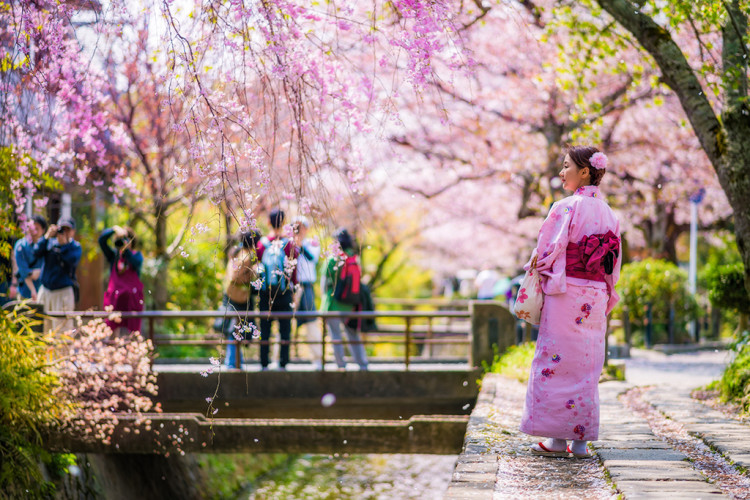
Nestled in Kyoto’s Higashiyama district, the Philosopher’s Path (Tetsugaku no Michi) is a scenic stone walkway that runs alongside a peaceful canal, stretching roughly two kilometers between Ginkaku-ji and Nanzen-ji Temple. Lined with hundreds of cherry trees, this tranquil trail bursts into breathtaking shades of pink every spring, making it one of Kyoto’s most celebrated hanami (flower-viewing) spots.
More than just a picturesque stroll, this path holds a deep connection to Japanese philosophy. Named after Nishida Kitaro, one of Japan’s most influential philosophers, it was his favorite route for daily meditation. Today, visitors can walk in his footsteps, cultural landmarks, and natural beauty that make this a must-visit destination in Kyoto.
Stroll the Path located at Tetsugaku No Michi, Sakyo Ward, Kyoto, Japan. Admission is free, and the temple grounds are open 24 hours a day.
Tracing the Footsteps of Nishida Kitaro: The Path’s Origins
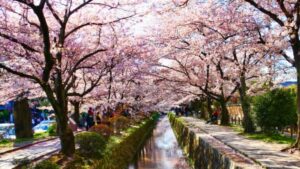
Photo from www.travelcaffeine.com
The Philosopher’s Path was originally constructed during the Meiji Period alongside the Lake Biwa Canal, an essential waterway for Kyoto. However, it wasn’t until the early 20th century that the path earned its philosophical name.
Nishida Kitaro, a renowned philosopher and founder of the Kyoto School of Philosophy, frequently walked this route as part of his Zen meditation practice. His connection transformed the path into a symbol of introspection and enlightenment, inspiring generations of scholars, writers, and artists who found creative inspiration along its quiet bends.
Even today, the path exudes an air of contemplation, attracting both travelers and locals seeking a moment of peace away from Kyoto’s bustling attractions.
When to Visit: Chasing the Seasons
The Philosopher’s Path offers ever-changing beauty throughout the year, but some seasons elevate its charm to extraordinary levels.
- Spring (Late March – Early April): Cherry blossoms blanket the path, forming a pink tunnel overhead. It’s the most popular season, so visit early in the morning for a quieter experience. During peak bloom, the path is transformed into a fairy-tale landscape, making it a prime location for hanami picnics.
- Summer (June – August): Lush greenery and the gentle trickling of water in the canal create a cool, refreshing retreat from Kyoto’s summer heat.
- Autumn (November): The fiery reds and golds of maple leaves create a magical contrast with Kyoto’s traditional architecture, making this season just as photogenic as spring.
- Winter (December – February): A light dusting of snow on the trees and temple rooftops adds a serene, almost mystical atmosphere to the walk.
- Early Mornings & Late Afternoons: No matter the season, these times offer fewer crowds, soft golden lighting, and a truly meditative atmosphere.
Mindful Meandering: Etiquette for a Meaningful Visit
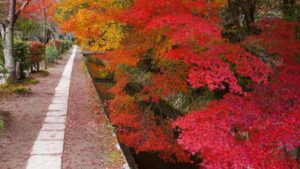
Photo from https://www.jrailpass.com
Respect is key when visiting Kyoto’s sacred and historical sites. Here’s how to make the most of your stroll while honoring local traditions:
- Walk quietly – Keep voices low to preserve the tranquil atmosphere.
- No littering – Carry a reusable bag for trash, as bins are scarce.
- Respect private property – Some charming homes and small shrines line the path.
- Pause, don’t rush – The beauty of the path is best enjoyed slowly.
- Photography etiquette – Avoid blocking the path for long periods while taking pictures.
How to Get There: Finding Your Zen Starting Point
By Train:
- Closest station: Keage Station (Tozai Line), a 15–20 minute walk.
- Alternative: Demachiyanagi Station (Keihan Line), followed by a bus or taxi ride.
Riding the Bus:
- Take a Kyoto City Bus from Kyoto Station to the Ginkaku-ji area.
Walking Route Suggestions:
- Start at Ginkaku-ji (Silver Pavilion) – A perfect introduction to Kyoto’s Zen aesthetics.
- Follow the path south along the canal, taking in temples, shrines, and cafés.
- End at Nanzen-ji Temple – A stunning finale with its massive Sanmon gate and lush gardens.
3 Scenic Highlights: Postcard-Perfect Views
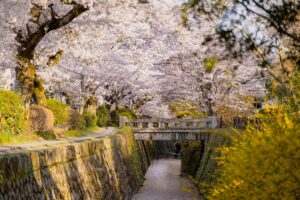
Photo from https://www.travelcaffeine.com
The Philosopher’s Path is one of the most photogenic spots in Kyoto, with natural beauty that shifts with the seasons.
- Cherry Blossom Tunnel – If you visit in spring, you’ll be treated to a breathtaking canopy of pink sakura blossoms. The petals often fall into the canal, creating a “pink river” effect, making it one of Kyoto’s most beloved hanami (flower-viewing) locations.
- Old Stone Bridges & Koi-Filled Canal – Along the path, several small stone bridges cross over the canal, offering charming viewpoints for photographers. The gentle ripples of the water, combined with the occasional sighting of koi fish, add to the meditative experience of walking here.
- Secret Alleys & Side Paths – If you take the time to wander off the main trail, you’ll discover hidden gardens, tiny shrines, and peaceful spots where you can sit and reflect. Some of these side paths lead to quiet residential streets, where you can see Kyoto’s traditional townhouses (machiya) and experience the city’s old-world charm.
Photography and visitor guidelines:
- To prevent falls and protect the moss, monopods and tripods are not allowed.
- Selfie sticks are prohibited inside the temple and should not be used in crowded areas.
- Photography of cultural properties inside the hall is not permitted.
- Pets are not allowed on the temple grounds.
- Eating, drinking, and smoking are strictly prohibited within the temple grounds.
Cafés & Shops: Savoring Kyoto’s Delights
One of the best things about walking the Philosopher’s Path is stopping by traditional tea houses, artisan shops, and cozy cafés to soak in the atmosphere.
- Yojiya Cafés – Famous for its matcha cappuccino featuring an iconic foam-art face. This Kyoto-based brand is also known for its luxury oil blotting paper, making for a unique souvenir. Their stores are all around Kyoto and to check more about their stores, check out their website at https://www.yojiya.co.jp/en/store/.
- Pathside Tea Houses – Scattered along the trail, these charming tea houses serve freshly whisked matcha and wagashi (traditional sweets), allowing visitors to take a peaceful break while gazing at the canal.
- Handcrafted Souvenir Shops – Keep an eye out for local pottery, calligraphy brushes, and handmade paper goods. These small shops often feature Kyoto-made items that make for meaningful keepsakes.
- Seasonal Street Vendors – Depending on the time of year, you might find stalls selling taiyaki (fish-shaped pastries filled with sweet bean paste), dango (sweet rice dumplings on skewers), or roasted chestnuts—perfect for snacking as you walk.
Nearby Attractions to Enhance Your Visit
The Philosopher’s Path is lined with some of Kyoto’s most serene temples and shrines, each offering a unique glimpse into Japan’s spiritual and artistic traditions.
| Attraction | What to Expect | Distance |
| Higashiyama District | A beautifully preserved historic area lined with traditional wooden machiya houses, narrow stone-paved streets, and cultural landmarks. Find the details below for more information: | 15-min walk from Philosopher’s Path |
| Heian Shrine | A magnificent Shinto shrine with an enormous vermilion torii gate marking its entrance. Find the details below for more information:
| 10-min bus ride from Philosopher’s Path |
| Kiyomizu-dera | One of Kyoto’s most famous temples, renowned for its massive wooden stage that offers panoramic views over the city, especially stunning in cherry blossom season and autumn. Find the details below for more information:
| 20-min bus ride from Philosopher’s Path |
| Ginkaku-ji (Silver Pavilion) | This Zen temple was originally built as a retirement villa for shogun Ashikaga Yoshimasa in the 15th century. Here are the essential details to make your trip seamless:
| Northern starting point of Philosopher’s Path |
| Honen-in | A hidden gem tucked away from the main path, the temple grounds feature seasonal sand art, which changes throughout the year, reflecting Buddhist teachings. It’s especially stunning in autumn when the surrounding maple trees turn fiery red. Here’s how to uncover this hidden gem of tranquility:
| 5-min walk from Philosopher’s Path |
| Eikan-do (Zenrin-ji Temple) | This temple is a must-visit in autumn when its gardens explode in brilliant red and gold hues. Eikan-do is also home to an unusual Amida Buddha statue, depicted turning its head sideways—a rare sight in Buddhist iconography. Legend says the statue turned to speak to a monk, urging him to follow the path of enlightenment. Here’s what you need to know before you go:
| 10-min walk from Philosopher’s Path |
Note: Opening hours, admission rates, and contact details may change. Please verify before visiting.
8 Mindful Travel Tips
To fully appreciate the Philosopher’s Path while being a responsible traveler, keep these mindful practices in mind:
- Avoid peak hours – Visit early in the morning or late in the afternoon to experience the path’s true tranquility and capture the best soft lighting for photography.
- Bring a reusable bottle – Kyoto has clean drinking water, and fountains are available along the way, reducing plastic waste.
- Support local businesses – Opt for family-run cafés, traditional tea houses, and small artisan shops, which preserve Kyoto’s unique culture and craftsmanship.
- Leave no trace – Carry any trash with you, avoid picking flowers, and respect the natural and cultural heritage of the area.
- Walk or cycle when possible – Kyoto is a pedestrian-friendly city, and exploring on foot or by bike minimizes your environmental footprint while allowing you to enjoy hidden corners.
- Be mindful of noise levels – The path is a place for quiet reflection, so keep voices low and avoid playing loud music.
- Respect temple and shrine etiquette – Follow proper customs, such as bowing before entering, refraining from touching sacred objects, and dressing modestly when visiting religious sites.
- Opt for eco-friendly souvenirs – Choose locally made, sustainable gifts such as handmade pottery, bamboo crafts, or reusable furoshiki wrapping cloths instead of mass-produced trinkets.
By embracing these small but impactful actions, visitors can help ensure that the Philosopher’s Path remains a serene and beautiful destination for generations to come
Final Thoughts: A Journey Through Kyoto’s Philosopher’s Path
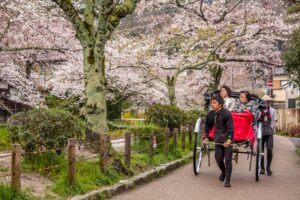
Photo from https://www.2aussietravellers.com
The Philosopher’s Path is more than just a scenic walkway—it’s an invitation to slow down, reflect, and immerse yourself in Kyoto’s timeless beauty. Whether you visit in spring under a pink canopy, in autumn among fiery leaves, or on a peaceful morning when the world feels still, the path offers a rare moment of serenity. Beyond its natural charm, the Philosopher’s Path is a gateway to Kyoto’s cultural and spiritual heritage. With ancient temples, hidden shrines, charming cafés, and artisan boutiques along the way, every step unveils a piece of tradition. The whispers of the past blend seamlessly with the present, allowing you to experience the soul of Kyoto at your own pace.
Pair your stroll with a visit to Higashiyama’s historic streets or a traditional tea ceremony, and you’ll leave with not just photos, but a deep connection to Kyoto’s essence. Whether you seek solitude, romance, or cultural discovery, the Philosopher’s Path is an experience that lingers long after your journey ends. So take your time, breathe in the fresh air, and let the path guide you into a world of serenity and wonder.
Frequently Asked Questions (FAQs) About Kyoto’s Philosopher’s Path
How long does it take to walk the entire path?
Walking the full length of the Philosopher’s Path at a relaxed pace takes about 30–40 minutes without stops. However, with temple visits, café breaks, and photo opportunities, it can easily take 2–3 hours.
What are the must-visit temples along the path?
Key temples include Ginkaku-ji (Silver Pavilion) for its Zen gardens, Honen-in for its moss-covered gate, Eikan-do for autumn foliage, and Nanzen-ji for its massive wooden gate and aqueduct.
Is the path accessible for wheelchairs and strollers?
The Philosopher’s Path is mostly flat and paved, making it accessible for wheelchairs and strollers. However, some side paths and temples may have steps or uneven surfaces.
Can I visit the Philosopher’s Path at night?
Yes, the path is open 24/7, but it is not well-lit at night. For safety and to fully appreciate the scenery, visiting during daylight hours is recommended.
Is the Philosopher’s Path a good place for solo travelers?
Absolutely! The peaceful atmosphere makes it an ideal place for solo travelers seeking quiet reflection, photography opportunities, or a leisurely stroll through Kyoto’s natural beauty.
Can I take a guided tour of the Philosopher’s Path?
Yes, guided walking tours are available and can provide deeper insights into the history, philosophy, and hidden spots along the path. However, exploring on your own at a relaxed pace is also rewarding.
Are pets allowed on the Philosopher’s Path?
Yes, you can walk with pets, but they should be on a leash, and owners are expected to clean up after them. Some cafés may even have outdoor seating areas that welcome pets.