The Philippines has spent years telling the world to love it. The world keeps checking the airfare.
Updated October 16, 2026, with the latest official figures available.
Contents
- Where Philippine Tourism Stands in 2026
- Southeast Asia Has Moved Past 2019. The Philippines Has Not.
- Domestic Tourism Is Carrying the Weight
- The Tourist Journey Begins Before the Beach
- Aviation Is Tourism Infrastructure
- China and the Price of Restricted Access
- When Geopolitics Enters the Hotel Room
- South Korea and Another Warning
- The Region Is Traveling Without Us
- Geography Is Not an Excuse for Friction
- The Policy Shift Has Begun
- Natural Beauty Is Not a Tourism Strategy
- Admiration Is Not a Booking
- A Note on the Numbers
There is something faintly embarrassing about having to explain, again, that a country with our natural attractions is struggling to recover its tourists while neighboring destinations have moved ahead. In 2019, the Philippines welcomed a record 8.26 million international visitors. In 2025, it recorded 6.48 million arrivals, comprising approximately 5.94 million foreign nationals and 543,085 overseas Filipinos. Six years had passed. We were still trying to regain ground we had already occupied.
That leaves the country at 78.5 percent of its 2019 total, about 1.78 million arrivals short. Even that is the generous count. The Department of Tourism (DOT) built the 2025 figure from Bureau of Immigration records; the government’s eTravel system had logged only about 5.85 million international arrivals, as then Tourism Secretary Christina Garcia Frasco acknowledged in January.
| Indicator | Figure | Period |
| International visitor arrivals (record) | 8.26 million | 2019 |
| International visitor arrivals | 6,484,060 | 2025 |
| Foreign nationals / overseas Filipinos | 5,940,975 / 543,085 | 2025 |
| Visitor arrivals, year to date | 4,415,860 (+0.78%) | January to August 2026 |
| Inbound tourism expenditure | ₱698.46 billion (-6.4%) | 2025 |
| Domestic tourism expenditure | ₱3.26 trillion (+3.0%) | 2025 |
| Tourism direct gross value added, share of GDP | 8.1% (12.9% in 2019) | 2025 |
| Employment in tourism industries | 7.70 million (15.7% of all jobs) | 2025 |
| WEF Travel & Tourism Development Index | 57th of 110 economies | 2026 |
Source: Department of Tourism; Philippine Statistics Authority; World Economic Forum. Each figure is linked to its source in the sections below.
Where Philippine Tourism Stands in 2026
 By August 31, 2026, the Department of Tourism’s new dashboard recorded 4,415,860 visitor arrivals, an increase of only 0.78 percent over the comparable period in 2025. The comparison is against 4,381,585 arrivals a year earlier. The dashboard, opened to the public in mid-September, combines eTravel records from the Department of Information and Communications Technology with Bureau of Immigration data.
Momentum has improved slightly since. Tourism Secretary Dita Angara-Mathay, who succeeded Frasco this year, said arrivals were running 3.46 percent ahead of 2025 as of October 6, and she is counting on the traditionally strong fourth quarter. The DOT’s 2026 target is 6.4 million to 6.8 million international arrivals. The official ambition, in other words, is to roughly match 2025.
The external environment has not helped. Angara-Mathay has pointed to the conflict in the Middle East and elevated oil prices, which account for a substantial share of airline operating costs. The World Economic Forum (WEF) flagged the same disruption to international aviation networks in its 2026 tourism index.
Recovery has become a rather elastic word.
Southeast Asia Has Moved Past 2019. The Philippines Has Not.
Vietnam received 21.2 million international visitors in 2025. Thailand received almost 33 million. Indonesia received roughly 15.4 million. Malaysia recorded 26.6 million under the narrower tourist measure used in regional comparisons. Countries count arrivals differently, so decimal-point league tables deserve some suspicion. The scale of the Philippine shortfall survives that qualification.
Across ASEAN, international arrivals reached around 147 million in 2025, according to the ASEAN Secretariat’s latest preliminary count, up from an early estimate of 144 million and above the region’s pre-pandemic total of 143.6 million. Vietnam grew by 20.4 percent and set a new record. The Philippines remained well below its own 2019 peak.
The detail behind those totals is instructive. Vietnam’s 2025 figure was 17.8 percent above its 2019 level, and its statistics office credited visa reform, renewed promotion, product diversification and better service quality. Malaysia’s government headline was 42.2 million international visitors, but that total includes 15.6 million same-day excursionists; tourist arrivals of 26.6 million were just above 2019’s 26.1 million. Thailand went the other way, with foreign arrivals down 7.23 percent to 32,974,321. Indonesia’s 15.39 million foreign visits were up 10.8 percent, though still below the 16.11 million recorded in 2019.
One island sharpens the comparison. Bali recorded 6,948,754 direct foreign arrivals in 2025, according to the Bali office of Statistics Indonesia. The entire Philippines received 5,940,975 foreign nationals.
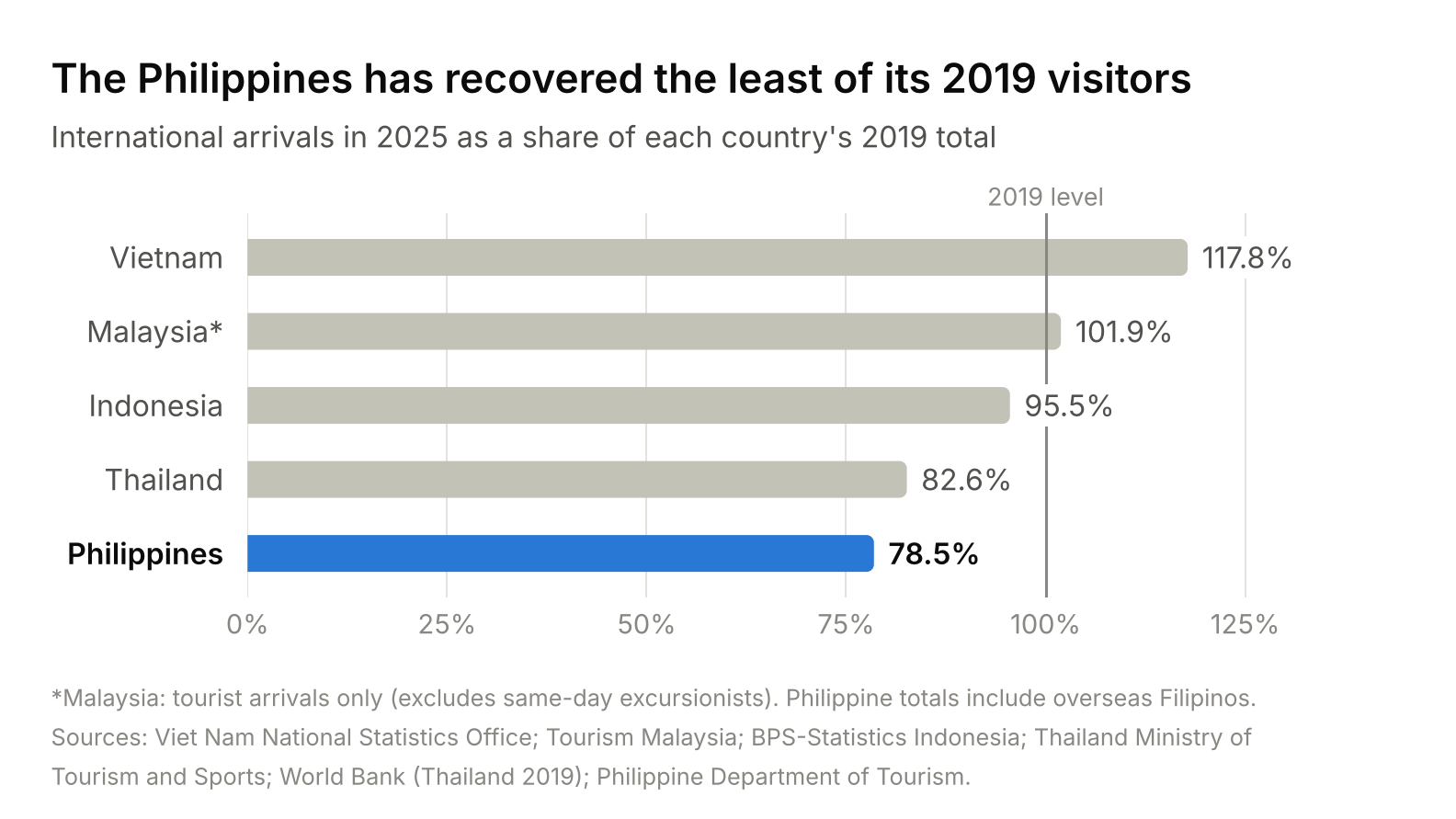
Figure 1. 2025 arrivals as a share of each country’s 2019 total. The Philippines has the furthest to go.
Table 2. International arrivals in Southeast Asia, 2019 vs 2025
| Destination | 2019 | 2025 | 2025 as a share of 2019 |
| Thailand | 39.9 million | 32.97 million | 82.6% |
| Malaysia (tourist arrivals) | 26.1 million | 26.6 million | 101.9% |
| Vietnam | about 18.0 million | 21.2 million | 117.8% |
| Indonesia | 16.11 million | 15.39 million | 95.5% |
| Philippines | 8.26 million | 6.48 million | 78.5% |
| ASEAN total (preliminary) | 143.6 million | about 147 million | about 102% |
Source: Thailand Ministry of Tourism and Sports via Bernama; World Bank (Thailand 2019); Tourism Malaysia via Focus Malaysia; Viet Nam Government Portal (Vietnam 2019 derived from the reported 17.8% growth); BPS-Statistics Indonesia; RRI; Philippine Department of Tourism; ASEAN Secretariat.
The gap has not narrowed this year. Vietnam welcomed about 17.7 million international visitors from January to September 2026, up 14.5 percent, and is chasing a target of 25 million. Thailand logged 20,935,135 foreign tourists from January to August, down 3.08 percent, and its tourism ministry expects the full year to stay close to 2025.
Table 3. 2026 so far: arrivals from January to August
| Destination | Arrivals, January to August 2026 | Change vs same period of 2025 |
| Thailand | 20,935,135 | -3.08% |
| Vietnam | nearly 16 million | +14.4% |
| Philippines | 4,415,860 | +0.78% |
Source: Thailand Ministry of Tourism and Sports via The Nation; Viet Nam National Statistics Office via VnEconomy; Philippine Tourism Data Dashboard via Daily Tribune.
Domestic Tourism Is Carrying the Weight
 Millions of Filipinos continue to earn their living from tourism. Millions also continue to travel within the country. Domestic tourism expenditure increased by 3 percent in 2025 to ₱3.26 trillion, while tourism industries employed an estimated 7.70 million people. These figures describe a substantial economy, with livelihoods extending through hotels, restaurants, transport, retail, and the smaller businesses that gather around a destination. Those 7.70 million jobs, up 2.5 percent, represent 15.7 percent of total employment in the country, according to the Philippine Statistics Authority (PSA).
The weakness becomes clearer when we examine the demand coming from abroad. Inbound tourism expenditure fell by 6.4 percent, from ₱745.99 billion to ₱698.46 billion. Tourism Direct Gross Value Added declined by 1.4 percent to ₱2.27 trillion, and its share of GDP fell to 8.1 percent. That share was 8.7 percent in 2024 and 12.9 percent in 2019, when tourism’s direct value added reached ₱2.52 trillion.
Filipinos traveling abroad, meanwhile, spent 3.5 percent more, a total of ₱357.93 billion. Foreign visitors still spend more here than Filipinos spend overseas, but on the PSA’s figures the gap narrowed from about ₱400 billion in 2024 to about ₱341 billion in 2025.
The DOT has drawn its own conclusion. Angara-Mathay said in May that domestic tourism generates four times more revenue than foreign arrivals and that the department would give it greater focus. On the PSA’s numbers, domestic spending was about 4.7 times inbound spending in 2025.
Domestic spending is carrying considerable weight while foreign visitor spending contracts. A resort can have occupied rooms and still belong to a national industry losing competitive ground.
Table 4. The Philippine tourism economy, 2024 vs 2025
| Indicator | 2024 | 2025 | Change |
| Tourism direct gross value added | ₱2.30 trillion | ₱2.27 trillion | -1.4% |
| Share of GDP | 8.7% | 8.1% | -0.6 points |
| Domestic tourism expenditure | ₱3.16 trillion | ₱3.26 trillion | +3.0% |
| Inbound tourism expenditure | ₱745.99 billion | ₱698.46 billion | -6.4% |
| Outbound tourism expenditure | ₱345.68 billion | ₱357.93 billion | +3.5% |
| Internal tourism expenditure | ₱3.91 trillion | ₱3.96 trillion | +1.2% |
| Employment in tourism industries | 7.51 million | 7.70 million | +2.5% |
| Share of total employment | 15.4% | 15.7% | +0.3 points |
Source: Philippine Statistics Authority, Philippine Tourism Satellite Account (May 2026), via Philstar, Daily Tribune and The Manila Times. 2024 figures as revised by the PSA.
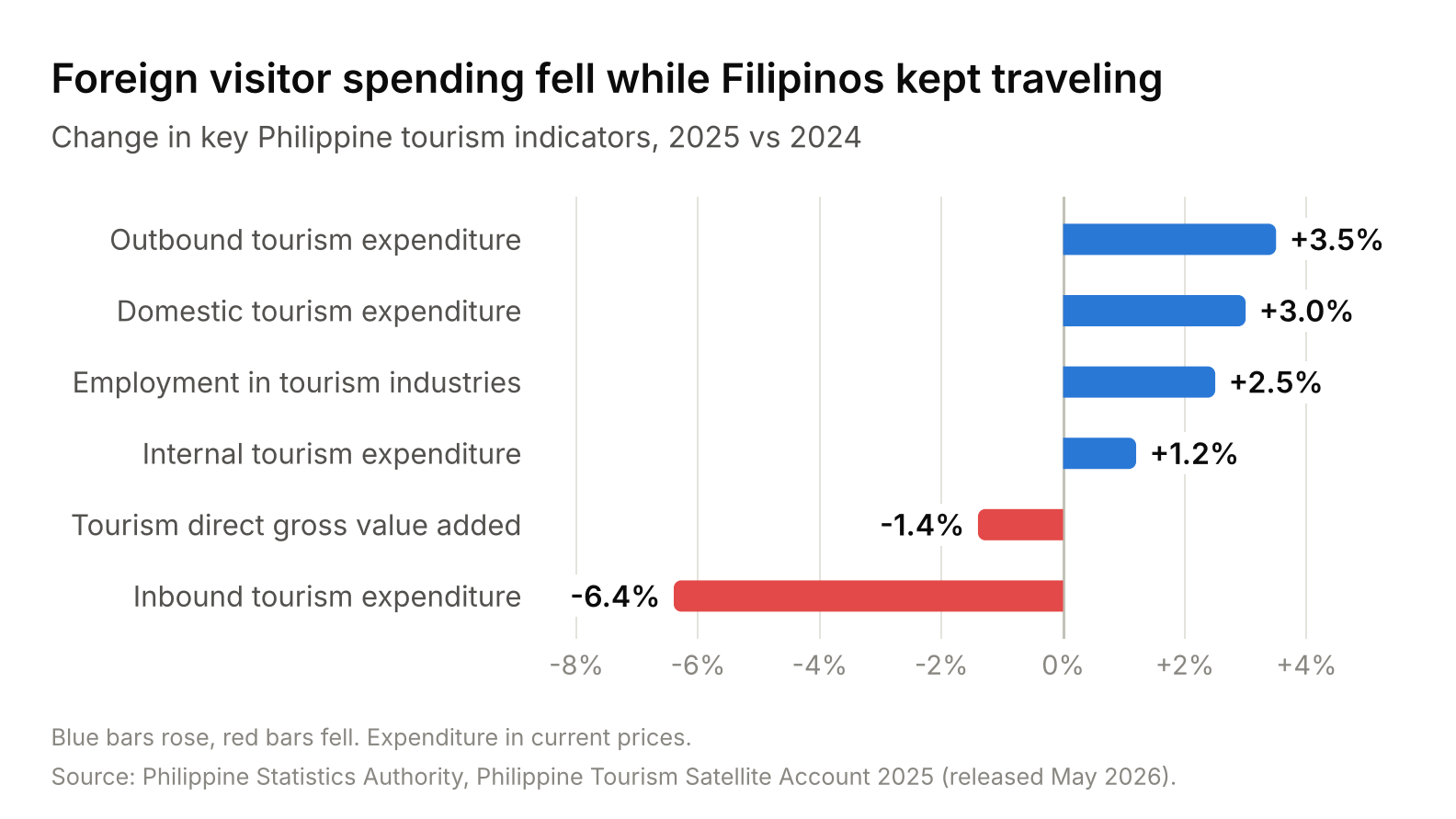
Figure 2. Domestic and outbound travel grew in 2025. Spending by foreign visitors fell.
The Tourist Journey Begins Before the Beach
To understand how this happens, follow the tourist before the tourist reaches the beach.
The transaction begins with a government website. What visa is required? How long will it take? Is there a direct flight? How much does it cost? What happens after landing? Another terminal, another flight, a ferry, a van? Can the transfers be booked together? Will the payment go through? Is the destination safe? How much of the holiday must be spent arranging the holiday?
The limestone cliffs of El Nido arrive quite late in this sequence.
Natural beauty acquires a price through the arrangements that make it accessible. The traveler pays in money, time, effort, and uncertainty. Each additional connection creates another expense and another opportunity for the itinerary to unravel. A destination competes through this entire sequence, including the parts its promotional videos politely omit.
For an archipelago, the accumulation is particularly unforgiving. Thailand and Vietnam can move tourists through substantial stretches of their territory by road and rail. A comparable Philippine itinerary can require several flights, ferries, terminal charges, baggage allowances, transfers, and intervals of waiting. The minor inconvenience becomes a recurring feature of the trip. Repeat it three or four times and it begins to govern the budget.
Land borders do part of that work for our neighbors before the trip has even begun. Vietnam received nearly 3.1 million foreign visitors by land in 2025, 14.4 percent of its total. The Philippines has no land border to lean on.
Tourism Secretary Dita Angara-Mathay acknowledged in June that Vietnam and Thailand offer cheaper prices. She made the admission after urging hotel sales executives to offer more competitive packages, and she put the difference down to geography: the country is archipelagic, she said, and that is why it is more expensive. The World Economic Forum’s Travel & Tourism Development Index, updated in September 2026, now places the Philippines 57th among 110 economies, eight places higher than in 2024, with a score of 4.08 out of 7. The improvement is real. So is the ranking that matters most to a regional traveler: the Philippines placed sixth of the seven Southeast Asian economies assessed, ahead only of Lao PDR. Our difficulty is sufficiently visible to appear in both an official admission and an international assessment.
The index also found that travel and tourism prices rose faster than general inflation in many economies between 2024 and 2026, eroding price competitiveness in three-quarters of those ranked. Affordability has become a regional contest, and the Philippines enters it carrying the extra costs of an archipelago.
Philippine research points the same way. A study by the Philippine Institute for Development Studies (PIDS) ranked the Philippines lowest among eight ASEAN countries for transport infrastructure adequacy. In March 2026, the ASEAN+3 Macroeconomic Research Office (AMRO) said the sector could grow faster if gaps in transport connectivity, utilities and digital infrastructure were closed, including integrated booking and payment systems.
Table 5. WEF Travel & Tourism Development Index 2026: Southeast Asian economies
| Economy | Global rank (of 110) | Rank among the seven |
| Singapore | 13 | 1 |
| Indonesia | 23 | 2 |
| Malaysia | 26 | 3 |
| Thailand | 38 | 4 |
| Vietnam | 52 | 5 |
| Philippines | 57 | 6 |
| Lao PDR | 75 | 7 |
Source: World Economic Forum, Travel & Tourism Development Index 2026, as reported by Context.ph and The Nation.
Aviation Is Tourism Infrastructure
Nearly 99 percent of international visitors enter the Philippines by air, according to the DOT. Aviation policy consequently shapes who can visit, where they can go, and whether the trip makes financial sense. International inbound seat capacity increased by 8.31 percent from January 1 to May 19, 2026, and additional routes have opened. These are useful gains. The country’s dependence on aviation makes sustained connectivity a basic condition of tourism growth.
That increase brought seats on direct inbound international flights to 7.78 million for the period. The base remains thin. In January, Frasco said the Philippines ranked sixth in ASEAN for available seats on incoming international flights, even after the DOT’s routes team helped launch 19 new direct international routes in 2025. Some long-haul links are coming: Delta Air Lines plans nonstop flights between Los Angeles and Manila from 2027.
Every missing direct route gives the traveler another connection to price, another schedule to reconcile, another reason to consider a destination with a simpler journey.
Fees enter the calculation through the same process. NAIA’s international passenger service charge rose from ₱550 to ₱950 in September 2025. The domestic charge increased from ₱200 to ₱390. Both took effect on September 14, 2025, the first increase in two decades. CAAP also raised passenger service charges at the airports it manages in 2025. Under the Civil Aviation Authority of the Philippines’ April 2025 circular, international departures from its airports, including the international gateways of Bohol-Panglao, Davao, Iloilo, Kalibo, Laoag and Puerto Princesa, now cost ₱900, and domestic departures from those gateways cost ₱350. An agency may explain each increase through its own administrative requirements. The traveler adds them together.
Add them, then. A visitor who lands in Manila, flies to Puerto Princesa for El Nido, returns to Manila and flies home pays ₱390 leaving NAIA, ₱350 leaving Puerto Princesa and ₱950 leaving NAIA again: ₱1,690 in terminal fees before a single baggage charge or van transfer. The airport’s operator, New NAIA Infra Corp., says its rates remain below inflation-adjusted levels and below those at airports such as Bangkok, Hanoi and Singapore’s Changi. Both statements can be true. The traveler still pays the sum.
Table 6. Passenger service charges at major Philippine gateways
| Gateway | International departure | Domestic departure | Basis |
| NAIA, Manila | ₱950 (was ₱550) | ₱390 (was ₱200) | From September 14, 2025 |
| Mactan-Cebu | ₱1,030 | ₱365 | Rates reported September 2025 |
| Clark | ₱750 | ₱315 | Rates reported September 2025 |
| CAAP international airports: Bohol-Panglao, Davao, Iloilo, Kalibo, Laoag, Puerto Princesa | ₱900 | ₱350 | Tickets bought from April 21, 2025 |
Source: Manila International Airport Authority via SunStar; Malaya Business Insight; CAAP Memorandum Circular 019-2025.
Tourism branding has to contend with this irritating materiality. Government can commission another logo, another hashtag, another montage of a woman in a white dress staring meaningfully at turquoise water. Somewhere outside the frame, somebody is calculating the cost of the second flight.
To be fair to the marketers, they have had little to work with. Frasco said the DOT promoted the country on a budget of only about ₱100 million in 2025, far below what competing destinations spend; the department secured ₱1 billion for promotions in 2026. A larger budget can put the montage in front of more people. It cannot shorten the journey the montage is selling.
China and the Price of Restricted Access
China makes the consequences of restricted access especially visible.
In 2019, approximately 1.74 million Chinese visitors came to the Philippines, making China our second-largest source market. By 2024, arrivals had fallen to 313,856. As of December 20, 2025, the country had received only 262,144 Chinese visitors that year. The DOT attributed the weakness to visa disruptions, security perceptions, and limited air connectivity, with China-Philippines routes operating at around 45 percent of their pre-pandemic capacity. Former Tourism Secretary Christina Frasco had earlier singled out the suspension of the electronic visa as the chief barrier, saying it gravely affected the Chinese market.
The regional comparison makes the number harder to dismiss. AMRO estimated that Chinese arrivals in 2024 were about 18 percent of their 2019 level, the weakest recovery among ASEAN members, while Malaysia, Vietnam and Singapore each drew more than 3 million Chinese visitors that year. In 2025, Vietnam received about 5.3 million visitors from China and overtook Thailand, with about 4.5 million, as the most popular destination in Southeast Asia for Chinese tourists.
For several years, access to one of the world’s largest outbound tourism markets remained constrained while competing ASEAN destinations made entry easier. The consequences appeared in flights, bookings, and arrivals.
The Philippines restored its e-visa program for Chinese nationals in late 2025. It returned in November after a suspension of about two years. Fourteen-day visa-free entry followed on January 16, 2026, initially through NAIA and Mactan-Cebu. The privilege is valid for one year, subject to review, and requires a passport valid for at least six months, a confirmed hotel booking and a return or onward ticket. Direct services from Hangzhou, Changsha, and Chongqing were subsequently added. They began in May 2026, when Angara-Mathay noted that seat capacity from China was still only about half of its 2019 level. Chinese arrivals reached 221,747 from January 1 to July 1, 2026, up 64.08 percent year on year, and the Tourism Promotions Board said 99.63 percent of them entered under the visa-free scheme. By the end of August, the DOT’s dashboard counted 303,567 Chinese arrivals, enough to make China the fourth-largest source market again. The improvement accompanied practical changes in the conditions of travel.
A visa requirement is something a prospective visitor encounters while deciding where to spend money. A direct flight is something that allows the decision to become a booking. Remove an obstacle at either point and more of the interest in a country can become an actual visit.
One caution on the size of the rebound: since March 2026, the DOT has counted source markets by country of residence rather than citizenship, so year-on-year growth rates for individual markets should be read with some care, as explained in A Note on the Numbers.
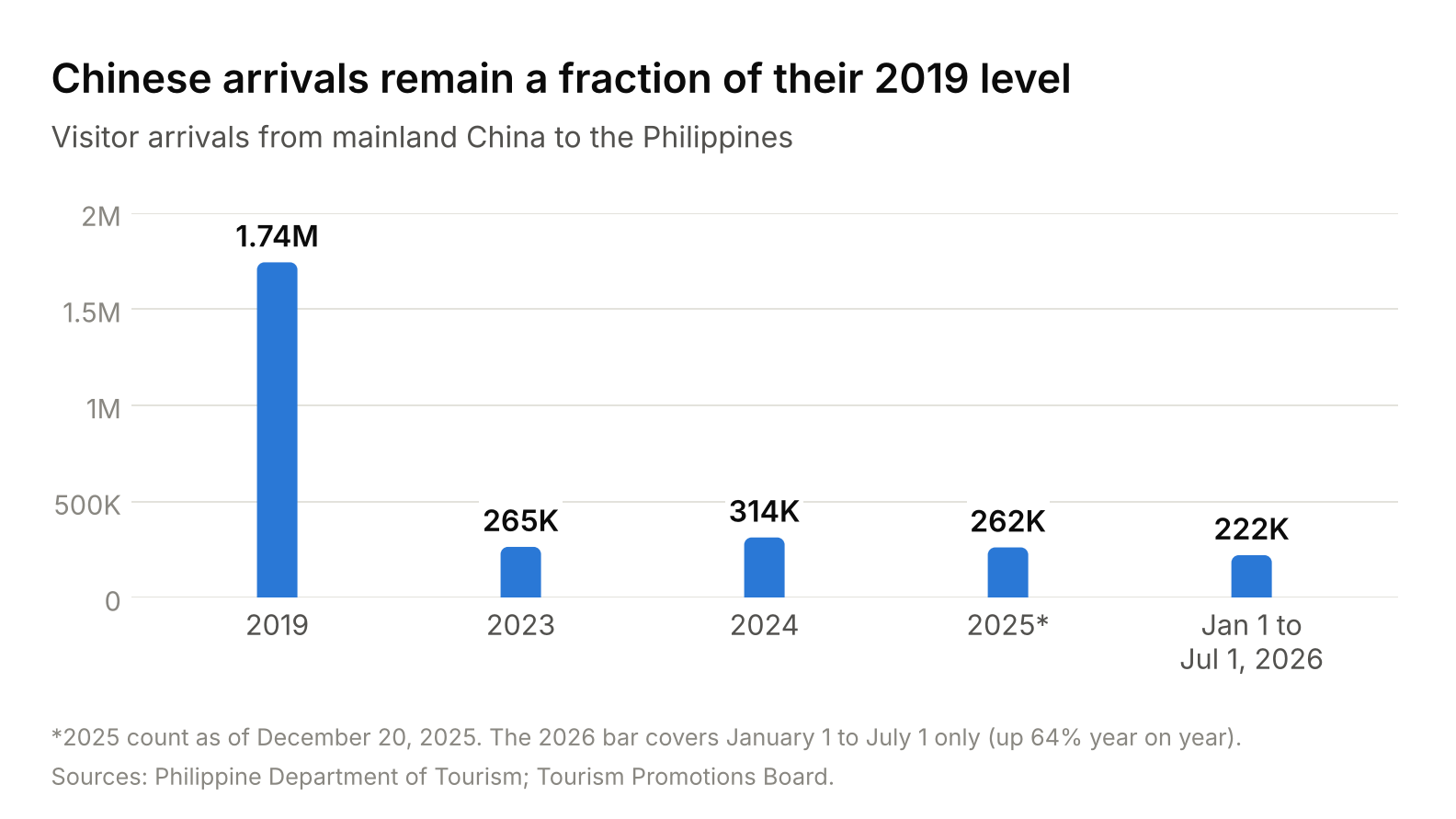
Figure 3. Chinese arrivals collapsed after 2019. The first half of 2026 alone reached about 85 percent of the 2025 count.
Table 7. China: the policy changes and the arrivals
| When | What changed |
| 2019 | 1.74 million Chinese arrivals; China is the second-largest source market |
| 2024 | 313,856 arrivals while the e-visa remains suspended |
| November 2025 | E-visa for Chinese nationals resumes after about two years |
| December 20, 2025 | 262,144 arrivals for the year to date; China ranks sixth |
| January 16, 2026 | 14-day visa-free entry begins at NAIA and Mactan-Cebu |
| May 2026 | Changsha, Hangzhou and Chongqing services to Manila launch |
| January 1 to July 1, 2026 | 221,747 arrivals, up 64.08% year on year |
| September 2026 | DOT seeks visa-free entry at more gateways, including Clark, Caticlan, Palawan and Bohol |
Source: Department of Tourism; Tourism Promotions Board; Department of Foreign Affairs; reporting by Philstar, Philippine Daily Inquirer, SunStar, Arab News and AGB.
When Geopolitics Enters the Hotel Room
 The Chinese market also reveals how far a diplomatic dispute can travel into civilian life. Bilateral tensions enter visa decisions, travel advisories, airline schedules, consumer confidence, organized tours, conventions, and investment. Their effects become ordinary very quickly: a hotel room remains empty, a guide loses a booking, a restaurant serves fewer customers.
Security perceptions, the second item on the DOT’s list, have been shaped in part by official statements. In April 2025, the Chinese Embassy in Manila advised Chinese nationals planning a trip to assess the risks carefully and make prudent travel decisions; Malacañang called the advisory a normal consular function and said everyone is welcome except criminals. Further advisories followed later in 2025, and the Department of Foreign Affairs responded that they mischaracterized the situation in the Philippines. These signals become part of the information through which people judge a destination. A traveler considering a holiday has little reason to volunteer for uncertainty.
Managing a diplomatic dispute includes attending to these consequences. Commercial, cultural, educational, and people-to-people exchanges require working channels even while governments pursue their respective interests. Allowing every disagreement to spread through the entire bilateral relationship imposes costs on people whose livelihoods depend on those exchanges.
South Korea and Another Warning
South Korea presents another warning. Long the Philippines’ largest source market, it sent 1.35 million visitors in 2025, down 18.49 percent, against 1.98 million in 2019. The slide has continued. In the first five months of 2026, the United States overtook South Korea, 531,859 arrivals to 501,789. By the end of August, the dashboard showed 926,575 American arrivals and 744,732 Korean ones.
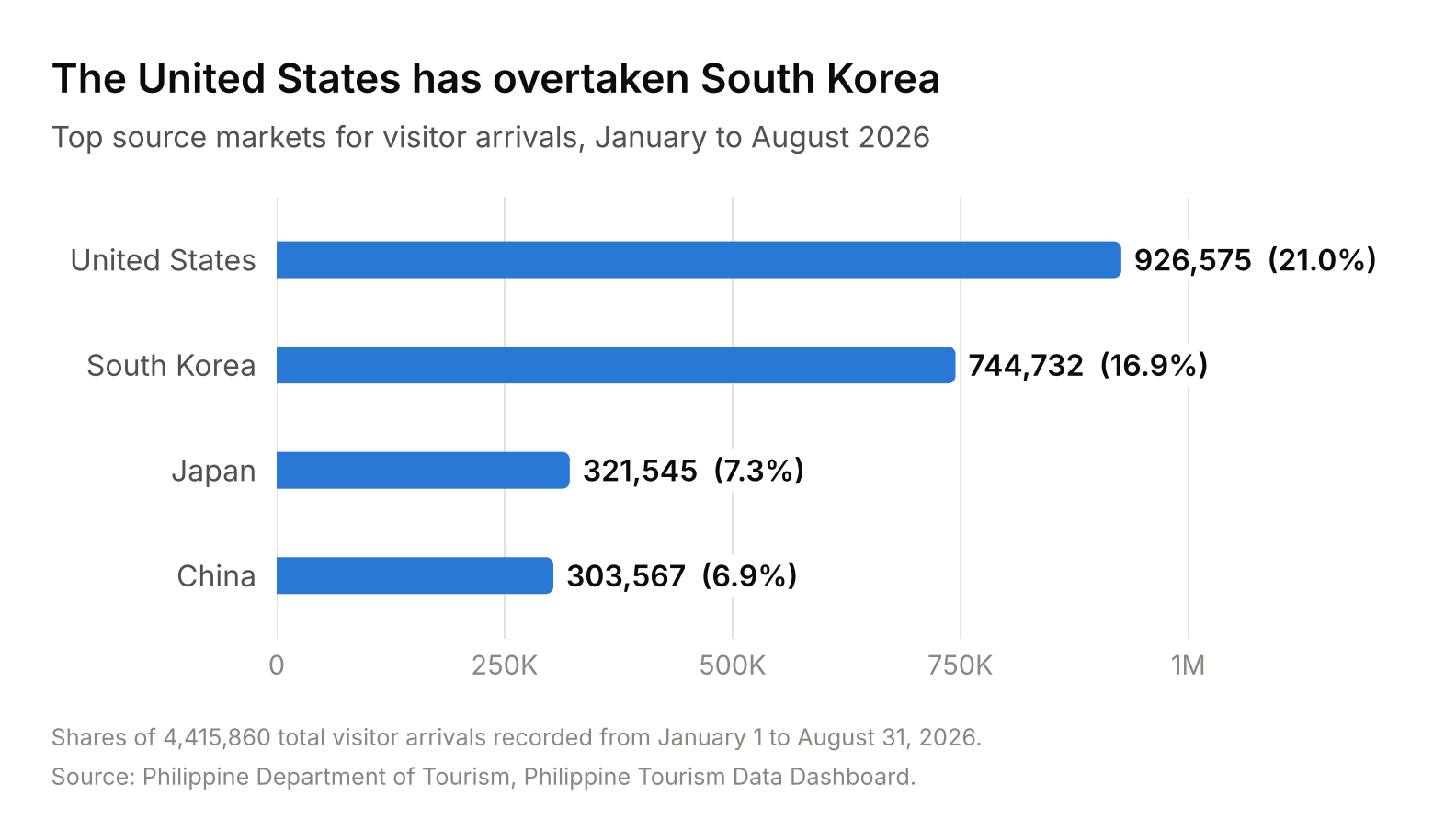
Figure 4. The four largest source markets in the first eight months of 2026.
Safety concerns involving Korean nationals had already prompted warnings and public discussion, with Philippine authorities undertaking measures to address anxiety among Korean travelers. The DOT’s tourism attaché in South Korea attributed the 2025 drop primarily to safety and security concerns, citing extensive Korean media coverage of the fatal shooting of a Korean tourist in Angeles City, Pampanga, in April 2025. He added that Korean travelers were choosing Vietnam and Thailand for their affordability, convenience and established tourism infrastructure. The Korean Embassy opened help desks inside local police stations in August 2025, after the DOT had proposed a national task force on tourist safety in May.
Part of the decline has little to do with the Philippines. Frasco noted in September 2025 that Korean arrivals were also falling in Thailand, Cambodia, Singapore and Vietnam. Even so, Vietnam received about 4.3 million Korean visitors in 2025, more than three times the Philippine total.
The American lead also needs to be read with some care. The Manila Times has reported that a significant share of American arrivals are Filipino-Americans and balikbayans visiting family, and the DOT is working to curate travel experiences for balikbayans and second- and third-generation Filipino-Americans. This is valuable, durable demand. Familial and cultural attachment gives many of these visitors a reason to come that survives an inconvenient journey. The connection already exists before the tourism campaign begins.
Tourism becomes harder when the traveler has no grandmother in Quezon City.
The Region Is Traveling Without Us
That traveler needs a reason to choose the Philippines and a workable means of getting here. Our neighbors have spent years coordinating the arrangements that make such a choice easier. Vietnam has pursued visa reform, aviation access, destination development, and international promotion. Thailand has built familiarity around the experience of arriving and moving through the country. Indonesia has developed Bali’s enormous international recognition while promoting other destinations. Malaysia and Singapore benefit from dense regional connections.
Southeast Asians themselves constitute a substantial market. In 2025, travelers from within ASEAN accounted for nearly 42 percent of all international arrivals in ASEAN destinations, according to the ASEAN Secretariat. Malaysia alone recorded 30.7 million visitors from fellow member states. We live within a large circulation of people with money to spend on neighboring countries.
Our share of that circulation remains small. In 2025, Singapore ranked only ninth among Philippine source markets, with 115,341 arrivals. Malaysia contributed 104,989; Indonesia, 49,903; Thailand, 38,863; and Vietnam, 33,559. Proximity has produced remarkably little traffic in our direction.
Traffic in the other direction is healthier. Singapore counted 726,065 visitor arrivals from the Philippines in 2025, more than six for every visitor from Singapore recorded here. Filipinos take full part in the regional circulation. As a destination, the Philippines is mostly bypassed by it.
Table 8. Southeast Asian neighbors as source markets, 2025
| Market | Visitor arrivals |
| Singapore residents to the Philippines (ninth-largest market) | 115,341 |
| Malaysia residents to the Philippines | 104,989 |
| Indonesia residents to the Philippines | 49,903 |
| Thailand residents to the Philippines | 38,863 |
| Vietnam residents to the Philippines | 33,559 |
| For comparison: Philippine residents to Singapore | 726,065 |
Source: Department of Tourism, Philippine Tourism Data Dashboard (by country of residence); Singapore Department of Statistics (Singapore Tourism Board data, sum of monthly 2025 arrivals).
Geography Is Not an Excuse for Friction
Geography accounts for part of the difficulty. An archipelago requires policies and infrastructure that compensate for the distances and transfers built into it. The islands will remain where they are. Government has considerable influence over how difficult they are to reach.
Direct regional aviation needs to be treated as infrastructure. Cebu, Clark, Davao, Bohol, Kalibo, Puerto Princesa, and other gateways need reliable international services and efficient onward connections. Visa arrangements must accommodate these entry points. Ports, transfers, booking systems, and transport between gateways and destinations must work together closely enough for a visitor to plan a trip with reasonable confidence.
The visa-free arrangement for Chinese visitors shows how much entry points matter. It applies only at NAIA and Mactan-Cebu, so a Chinese family bound for Bohol, Palawan or Boracay either routes through one of those two airports or arranges a visa in advance. Every such rule nudges the holiday to begin somewhere other than the destination.
The first encounter with the Philippines should allow a traveler to proceed to the destination without deciphering three counters and asking a stranger where the van went.
The Policy Shift Has Begun
The current DOT appears to recognize several of these requirements. It is pursuing visa liberalization, additional direct routes, secondary gateways, investment, and closer coordination with airlines. It wants Chinese visa-free entry extended beyond NAIA and Mactan-Cebu to gateways including Clark, Caticlan, Palawan and Bohol, a change that still needs other government agencies to sign on. These proposals address identifiable points where potential demand can be lost. Their value will depend on implementation and on the connections available after a visitor lands.
The department has also begun publishing more of its evidence. The dashboard released in September includes downloadable datasets, and the DOT says it wants public access to tourism data to become permanent. The timing is apt: the Philippines chairs ASEAN in 2026, hosted the ASEAN Tourism Forum in Cebu earlier this year and is preparing for the 49th ASEAN Summit in Manila in November.
Domestic campaigns have an immediate role as well. Hotels, airlines, guides, restaurants, and small tourism businesses need customers while international demand remains weak. “Discover More to Love,” launched in June 2026, assembled thousands of discounted travel offers and packages, with participating hotels offering reductions of up to 70 percent. Affordability affects Filipinos traveling within their own country, too. The campaign launched on June 26 with more than 3,000 offers aimed at the lean months from July to November, including discounts of up to 70 percent from more than 70 hotels and resorts. As the Manila Bulletin noted, it arrived amid online discussions in which Filipinos pointed out that traveling abroad can cost less than visiting local destinations.
The scale of domestic spending can nevertheless make the external weakness difficult to see from inside a busy resort. Filipinos spent ₱3.26 trillion on domestic tourism in 2025. That spending can sustain activity across a destination while inbound expenditure declines and international arrivals remain below their previous peak. A full lobby gives us information about the hotel. Assessing the country’s competitive position requires a wider view.
Natural Beauty Is Not a Tourism Strategy
 The Philippine tourism industry has relied heavily on the apparent self-evidence of our attractiveness. Look at the islands. Look at the water. Look at the people. Surely the world will come.
We have marine biodiversity, food, festivals, mountains, cities, heritage, music, nightlife, diving, surfing, English proficiency, and a service culture that other tourism ministries would happily acquire if culture could be ordered through procurement. These advantages deserve development and protection. Their commercial value depends on the traveler being able to reach them at an acceptable cost.
The world is not short of travelers. The WEF counted a record 1.5 billion international tourist arrivals in 2025, and it concluded that affordability pressures, investment gaps and workforce constraints are increasingly shaping the sector’s future. Demand exists. The contest is over who makes it easiest to act on.
Ease has to be produced through specific arrangements: clear entry rules, available flights, reliable transfers, intelligible prices, functioning payment systems, and credible safety measures. Someone has to coordinate the parts. Someone has to examine the journey as the traveler experiences it, including the expenses that belong to different agencies and the delays that fall between their responsibilities.
Admiration Is Not a Booking
A traveler can admire the Philippines, save photographs of its islands, recommend it to friends, and book Vietnam. Admiration can survive the abandoned itinerary. The lost booking still leaves a room empty.
We have spent years inviting people to picture themselves on our beaches. They are trying to work out how to get there.
A Note on the Numbers
Tourism statistics are less tidy than league tables suggest. These are the definitions behind the figures above.
- Philippine arrival totals include overseas Filipinos as well as foreign nationals. The 2025 total of 6,484,060 includes 543,085 overseas Filipinos.
- The DOT’s 2025 total relies on Bureau of Immigration records; the eTravel system captured about 5.85 million arrivals. The public dashboard combines eTravel and immigration data.
- Immigration counts are broader still. The Bureau of Immigration logged 15,608,868 passenger arrivals in 2025, including Filipinos returning home; 6,704,007 of them were foreign nationals. Tourism statistics use a narrower definition.
- Since March 2026, the DOT has reported source markets by country of residence rather than citizenship, which affects year-on-year comparisons for individual markets such as China and South Korea.
- Malaysia’s headline 42.2 million visitors in 2025 include 15.6 million same-day excursionists, so this article uses its 26.6 million tourist arrivals. The ASEAN Secretariat’s preliminary regional total of about 147 million uses Malaysia’s broader visitor count and includes Timor-Leste data for the first half of 2025 only.
- National definitions differ at the margins, which is why Figure 1 measures each country against its own 2019 baseline rather than ranking raw totals.
- Several 2026 figures cover part of the year. Each is labeled with its period.