Cryptocurrency might sound like a buzzword, but it’s quickly becoming a part of everyday life. At its core, cryptocurrency is digital money that’s decentralized, meaning no banks or middlemen are involved. Powered by blockchain technology, it’s transparent, secure, and global. From Bitcoin to Ethereum and beyond, the crypto world is full of digital coins with unique purposes—and even quirkier names.
In recent years, crypto trading has exploded in popularity. Why? Because people love the idea of being their own bank—and possibly turning small investments into big gains. But let’s be real: this isn’t a guaranteed get-rich-quick scheme. This guide is here for curious beginners, aspiring traders, and even the “crypto-curious” who just want to understand what all the hype is about. Just a friendly reminder though—crypto trading comes with risk, so always tread carefully and never invest more than you’re willing to lose.
What Is Cryptocurrency Trading?

Photo from
https://m.foolcdn.com
Cryptocurrency trading is the process of buying and selling digital currencies like Bitcoin, Ethereum, or other coins. The goal is to make a profit by selling a coin for more than you paid for it. For example, if you buy Bitcoin at $20,000 and later sell it when the price rises to $25,000—you’ve made a profit of $5,000. That’s trading in a nutshell: buy low, sell high.
Crypto trading happens online through special platforms called exchanges. These platforms let you place trades, watch price changes, and manage your digital assets.
It might sound complicated at first, but don’t worry. You don’t need to be a finance expert. Many platforms are designed for beginners. You can start small, learn step by step, and practice safely before using real money. Just remember: prices can change quickly. That’s why it’s important to learn before you trade. And that’s exactly what this guide is here for.
Investing vs. Trading: What’s the Real Difference?
Before diving into crypto, it’s helpful to know the difference between investing and trading. They both involve buying cryptocurrency, but the approach and goals are quite different.
Investing is a long-term strategy. Investors buy and hold cryptocurrencies for months or even years, hoping their value will grow over time. This method focuses on building wealth slowly and steadily. Investors usually look at the big picture—like the project’s purpose, team, and future potential (this is called fundamental analysis).
Trading, on the other hand, is short-term and more active. Traders aim to profit from quick price changes—sometimes in minutes, hours, or days. This strategy involves watching charts, using indicators, and timing the market. It can be exciting but also risky, since prices can swing fast.
Both strategies can work, but it depends on your goals, time, and risk comfort. If you like a slower pace, investing might suit you. If you enjoy analyzing charts and quick decisions, trading might be a better fit.
Here’s a quick side-by-side comparison:
| Feature | Investing | Trading |
| Time Horizon | Long-term (months to years) | Short-term (minutes to weeks) |
| Goal | Build wealth slowly | Profit from quick price changes |
| Risk Tolerance | Generally lower | Higher, due to market volatility |
| Strategy | Buy and hold | Technical analysis and timing |
| Tools Used | Fundamental analysis | Charts, indicators, and news |
Investing is like planting a tree and waiting for it to grow. Trading is more like surfing waves—you need timing, patience, and skill. Choose what fits your lifestyle and risk appetite.
Buy Low, Sell High (And Try Not to Panic)

Photo from
https://www.shutterstock.com
The core principle of trading is simple: buy low, sell high. You buy a cryptocurrency when the price is lower, then sell it when the price rises. Easy, right? But in the world of crypto, prices can change very quickly—sometimes in just minutes. This rapid change is known as volatility.
Here’s what you need to know about volatility:
- Opportunities for Profit: Volatility can be your friend. If you buy when the price is low and sell when it rises, you can make a profit. It’s all about timing!
- Higher Risk: While volatility can bring profits, it also brings risk. Prices can fall as quickly as they rise, and you might find yourself losing money just as fast.
To succeed in the volatile world of crypto, here’s what you need to do:
- Learn the Market: Before jumping in, spend some time learning about the market trends and how prices usually behave. This will help you make more informed decisions.
- Have a Plan: Set clear goals and strategies. For example, decide in advance at what price you’ll sell, or if you want to hold for a long-term increase.
- Stay Calm: Crypto markets can be stressful with all the ups and downs. Don’t panic when prices drop suddenly. Stick to your plan and avoid emotional decisions.
Remember, you don’t need to make trades every day. Take your time and don’t rush. With practice, you’ll learn how to handle market swings more confidently.
Speak the Crypto Lingo: Key Terms You’ll Hear A Lot
Before diving into trading, it’s important to get familiar with some basic terms. Here’s a quick glossary to help you speak the crypto language:
- Altcoins: These are any cryptocurrencies other than Bitcoin. Popular examples include Ethereum, Solana, and Dogecoin. Altcoins often have unique features or use cases that set them apart from Bitcoin.
- Tokens: A token is a type of digital asset that exists on an existing blockchain (like Ethereum). Not all tokens are cryptocurrencies—some represent things like assets, access rights, or even votes in a decentralized system.
- Blockchain: A blockchain is like a digital ledger or database that records every transaction securely and publicly. It’s decentralized, meaning no one person or company controls it. This makes it transparent and secure for everyone involved.
- Exchanges: Crypto exchanges are online platforms where you can buy, sell, and trade cryptocurrencies. They act like a marketplace for digital assets. Examples of popular exchanges include Coinbase, Binance, and Kraken.
- Wallets: A crypto wallet is where you store your digital assets. There are two types:
- Hot Wallets: These are online wallets, connected to the internet. They’re easy to access but can be less secure.
- Cold Wallets: These are offline storage methods, like hardware wallets. They are more secure because they’re not connected to the internet, but harder to access quickly.
Learn Before You Earn: Essential Knowledge You Need
Blockchain 101: It’s Not That Scary

Photo from
https://img.freepik.com
Think of blockchain as a super-secure, never-changing notebook that everyone can read, but no one can erase or alter. It’s the underlying technology behind all cryptocurrencies, and it’s what keeps transactions safe and transparent.
Here’s how it works:
- Every time someone makes a transaction (buying, selling, or transferring cryptocurrency), it’s recorded in a block.
- Once a block is filled with transactions, it’s chained to the previous block, creating a chain of data—hence the name blockchain.
- This ledger is not controlled by any single entity, like a bank or government. Instead, it’s decentralized, meaning no central authority is in charge. The entire network of computers that run the blockchain validates and records the transactions.
What makes blockchain so powerful is its security and transparency. Since every transaction is recorded publicly and can’t be changed, it provides a trustworthy way for people to exchange value without needing intermediaries.
Big Players in the Crypto Game

Photo from
https://www.bankrate.com
There are hundreds of cryptocurrencies out there, but some have stood out as the most popular and widely recognized. Here’s a quick look at the top players:
- Bitcoin (BTC): The original cryptocurrency and the most well-known. Bitcoin paved the way for all other cryptocurrencies and is often seen as a “store of value” or digital gold. It’s widely accepted and used as a benchmark for the entire crypto market.
- Ethereum (ETH): Ethereum is more than just a cryptocurrency—it’s a platform for building decentralized apps (dApps). Its smart contract feature allows agreements to be executed automatically, without a middleman. It’s the go-to blockchain for developers.
- Solana (SOL): Known for its super-fast transaction speeds and low fees, Solana is a favorite for projects in DeFi (Decentralized Finance) and NFTs (Non-Fungible Tokens). It’s often praised for its scalability.
- Ripple (XRP): Ripple focuses on creating fast and cheap international payments. It’s especially popular with banks and financial institutions, aiming to revolutionize cross-border transactions.
- Cardano (ADA): A blockchain built on research and peer-reviewed science. Cardano focuses on sustainability and aims to offer a more secure and scalable platform, especially for smart contracts and decentralized applications.
Each of these cryptocurrencies has its unique features and use cases, which is why they’re popular among traders and investors. They also represent the diversity in the crypto market, with different goals and applications beyond just being a currency.
Picking Your Crypto Exchange: Where the Magic Happens
What Is a Crypto Exchange, Anyway?
A crypto exchange is like the online home base for all your cryptocurrency buying, selling, and trading. Think of it as a digital currency shop—where instead of picking up snacks or shoes, you’re picking up Bitcoin, Ethereum, or other coins.
Here’s what it lets you do:
- Buy crypto using your local money (like dollars, euros, or pesos).
- Sell crypto when you’re ready to cash out.
- Trade one coin for another (for example, swapping Bitcoin for Ethereum).
- Track prices, view charts, and follow market trends in real time.
There are two main types of exchanges:
- Centralized Exchanges (CEXs) – These are run by companies (like Coinbase or Binance) that manage your transactions. They’re easy to use, usually have customer support, and are great for beginners.
- Decentralized Exchanges (DEXs) – These let you trade directly with others, with no middleman. You stay in control of your own crypto, but the platforms can be a bit trickier for newcomers.
A good crypto exchange will also offer features like:
- Security tools (such as two-factor authentication),
- Wallets to store your coins,
- Educational resources to help you learn the ropes, and
- Mobile apps so you can trade on the go.
Picking the right exchange early on can set the tone for your whole trading journey. So, go for one that feels easy, trustworthy, and matches your comfort level
Centralized vs. Decentralized: The Showdown
Before you start trading, it’s important to know where you’ll be doing it. Crypto exchanges come in two main flavors: centralized and decentralized. Each has its own pros, cons, and vibe—so let’s break it down and see which one fits you best:
| Feature | Centralized Exchange (CEX) | Decentralized Exchange (DEX) |
| Control | Run by a company or organization. They handle transactions and user accounts. | Run by smart contracts (automated code) on the blockchain—no middleman. |
| Ease of Use | Very beginner-friendly. Most have simple interfaces and customer support. | Can be tricky for beginners. You’ll need to connect a wallet and know how to navigate blockchain tools. |
| KYC Required | Yes. You must complete Know Your Customer verification—upload ID, proof of identity, etc. | No. DEXs don’t ask for personal info—more privacy, but also more responsibility. |
| Speed | Transactions are usually faster thanks to optimized systems and servers. | Sometimes slower, especially during high demand, because it relies on blockchain confirmation. |
| Security | You’re trusting the platform to keep your assets safe—but if they’re hacked, your funds could be at risk. | You keep control of your private keys, meaning you’re responsible for your own security—but that also means more freedom. |
4 Top Beginner-Friendly Platforms

Photo edited using canva
With so many exchanges out there, it can feel overwhelming to pick the right one. Don’t worry—we’ve rounded up three of the most trusted platforms that are perfect for beginners. These offer a good balance of ease, features, and security to get you started on the right foot:
- Coinbase – Super clean interface and one of the easiest platforms to use. Perfect for U.S. users and those just starting out. Great educational resources, too!
- Binance – A global giant with access to tons of cryptocurrencies. It offers both basic and advanced trading modes, so you can grow with it as you learn.
- Kraken – Known for its strong security and responsive customer support. Its interface is beginner-friendly, but also offers more advanced features when you’re ready to level up.
- Crypto.com – A user-friendly app with a sleek design that makes buying, selling, and spending crypto easy. It also offers a crypto debit card, cashback rewards, and access to DeFi features, making it a solid
Each of these platforms has its own vibe—so take a little time to explore them and choose the one that feels right for you.
What to Look for When Choosing an Exchange
Not all crypto exchanges are created equal. Choosing the right one can make your crypto journey smooth—or seriously stressful. Here are the key things to keep an eye on:
- Fees – Every time you buy, sell, or trade, there might be a fee. Some platforms charge more than others, especially for small trades or credit card payments. Look for a fee structure that fits your style.
- Security – Safety first! Check if the exchange has a strong track record. Have they been hacked? If so, how did they respond? Features like two-factor authentication (2FA) and cold storage for funds are big pluses.
- Ease of Use – A simple, clean design goes a long way—especially when you’re just starting out. Bonus points if they have tutorials, support chat, or a helpful mobile app.
- Available Coins – Some exchanges only offer the basics like Bitcoin and Ethereum. Others let you explore a wide range of altcoins. If you’re curious about variety, make sure the exchange has what you’re looking for.
Choosing your exchange is like picking your home base in crypto. Make sure it’s a place you feel comfortable and supported.
Practice First: Try Paper Trading

Photo from
https://www.investopedia.com
Before you start risking your hard-earned money in the Forex market, paper trading is the perfect place to begin. Think of it as a virtual sandbox where you can play with real market data—using fake money. You get to experience the ups and downs of trading without the stress of actual financial loss.
This practice mode lets you try out different strategies, learn how the market moves, and get comfortable using trading platforms. Whether you want to test being a day trader, swing trader, or even a scalper, paper trading gives you the freedom to experiment and make mistakes—because mistakes are the best teachers when there’s nothing on the line.
Best Platforms to Try:
- TradingView – Excellent for practicing chart analysis and spotting trends.
- Binance Testnet – Offers a realistic trading environment using fake money, but with all the real features.
- Crypto Parrot – Fun and interactive, designed to help beginners learn the ropes without pressure.
Paper trading helps you build confidence and test your strategies without the financial stress, making it a must for beginners!
Crafting Your Trading Strategy: Don’t Just Wing It
When it comes to crypto trading, having a clear strategy is crucial. Don’t dive in without knowing what you’re aiming for. Here’s a breakdown of popular strategies:
| Strategy | Time Commitment | Risk Level | Best For |
| Day Trading | High – Involves frequent trades throughout the day. | High – Fast market movements require quick decisions. | Active traders who want to capitalize on short-term price changes. |
| Swing Trading | Moderate – Hold assets for a few days to weeks. | Moderate – Aiming for price movements over a longer time. | Traders who spot trends and can hold positions for a few days or weeks. |
| HODLing | Low – Buy and hold strategy, little time needed. | Low – Less risk, long-term approach. | Long-term investors who believe in a coin’s future value. |
Each strategy caters to different types of traders, depending on your level of involvement, time availability, and risk tolerance. Whether you’re looking for quick profits or willing to ride out the market for the long haul, there’s a strategy that fits your approach.
Risky Business: Don’t Gamble It All
Crypto is exciting—but risky. Only trade what you can afford to lose. No rent money, no emergency funds, and definitely no loan sharks involved.
Stop-Losses Save Lives (And Wallets)
A stop-loss is a safety net that closes your trade if the price drops too low. A take-profit does the opposite—it sells when your coin hits a happy high. Set these every time. Thank yourself later.
Getting Set Up: Your First Steps
Ready to jump in? Here’s how to set up your crypto trading toolkit, step by step:
1. Create Your Exchange Account
Go to your chosen exchange platform (like Coinbase, Binance, or Kraken).
- Click “Sign Up”
- Enter your email and a strong password
- Confirm your email address
This gets you access to your trading dashboard.
2. Complete KYC (Know Your Customer)
Most platforms require you to verify your identity before you can trade.
- Upload a government-issued photo ID (passport or driver’s license)
- You might be asked to take a selfie for identity confirmation
This process helps prevent fraud and keeps the platform compliant with regulations.
3. Set Up Your Wallet
You’ll need a crypto wallet to store your assets. There are two main types:
- Hot Wallet: Connected to the internet. Easy to use for frequent trading but less secure.
- Cold Wallet: Offline storage (like a hardware wallet). More secure, ideal for long-term savings.
- Choose one based on how often you plan to trade.
4. Secure Your Account and Assets
Security is everything in crypto. Take these precautions:
- Enable two-factor authentication (2FA) for your account
- Write down your wallet’s backup recovery phrase and store it safely offline
- Never share your passwords or recovery phrases with anyone
5. Learn to Read Crypto Charts
Before jumping into your first trade, it’s important to understand the basics of price charts. Start with:
- Candlestick charts – show how prices move over time
- Support and resistance levels – help you spot price trends
- Common indicators – like RSI (measures if a coin is overbought or oversold), MACD (tracks momentum), and volume (shows trading activity)
This gives you a clearer picture of when to buy and when to sell.
6. Choose a Trading Strategy
Don’t wing it—pick a method that matches your lifestyle and risk tolerance:
- Day trading – buying and selling within the same day
- Swing trading – holding for a few days or weeks
- HODLing – holding long-term and ignoring short-term noise
Have a clear plan, and don’t forget to set stop-loss and take-profit limits to manage your risk.
7. Start with Paper Trading
Practice makes perfect.
- Use a demo account or paper trading platform to try your strategy
- No real money involved—just learning how things work without the stress
This helps build confidence and avoid rookie mistakes.
How to Read Crypto Charts
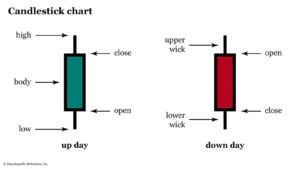
Photo from
https://cdn.britannica.com
Candlestick Charts: Your Visual Roadmap. Candlestick charts are the most popular way to track price movements. Each “candlestick” represents a specific time period, showing the opening, closing, highest, and lowest prices. They’re made up of two parts:
- The body: The solid part that shows the difference between the opening and closing price.
- The wick: The thin lines above and below the body that show the highest and lowest prices within the timeframe.
By observing the patterns formed by these candlesticks, you can get a sense of market sentiment. For example, if you see a long green candlestick, it means the price rose significantly within that time period, and the market was bullish.
Support and Resistance Levels: Market Boundaries
Both Support and resistance are like invisible barriers for prices:
- Support: This is the price level at which an asset tends to find buying interest. It acts like a “floor” that prevents prices from falling lower.
- Resistance: This is the price level where selling pressure tends to kick in, preventing prices from rising above it.
Understanding where these levels lie can help you predict when a price might bounce (support) or drop (resistance). Traders often use them to time their buy and sell orders.
3 Common Indicators: The Market’s Warning Signals
Indicators are tools used to assess market conditions and price movements. Here are a few you’ll come across frequently:
- RSI (Relative Strength Index): Shows if a coin is overbought or oversold. An RSI above 70 means it might drop, while below 30 suggests it could rise.
- MACD (Moving Average Convergence Divergence): Compares two moving averages to spot momentum changes. When the MACD lines cross, it could signal a buy or sell.
- Volume: Measures how much a coin is being traded. High volume means a strong trend, while low volume suggests weak market interest.
By understanding these basics, you can start to interpret crypto charts and make informed decisions about when to buy or sell.
3 Common Mistakes Beginners Make (and How to Dodge Them)
- FOMO (Fear of Missing Out): Don’t buy just because everyone else is. Stick to your plan and avoid chasing trends when prices spike.
- Overtrading: Trading nonstop can lead to burnout. Focus on fewer, smarter trades rather than trying to trade all day.
- Ignoring Fees and Security: Trading fees add up quickly, and unsecured accounts are risky. Always check fees before trading and use strong security like two-factor authentication (2FA).
By avoiding these common mistakes, you’ll set yourself up for better success in crypto trading!
Tools of the Trade: How They’ll Help You Succeed
- CoinMarketCap – CoinMarketCap tracks real-time prices, market caps, and volume for thousands of cryptocurrencies. It helps you stay updated on the market to spot opportunities and avoid price drops.
- TradingView – TradingView lets you analyze crypto price movements with charts and indicators. It’s perfect for understanding trends and testing strategies, whether you’re a beginner or an advanced trader.
- Crypto Panic – Crypto Panic aggregates real-time news from multiple sources, giving you alerts on price changes, news, and updates. It helps you stay on top of market-moving events and avoid missing important developments.
These tools make it easier to track prices, analyze trends, and stay informed—giving you an edge in your trading journey.
Resources to Keep You Sharp
Stay in the Loop by Checking These Resources Religiously:
- News Sites: Stay updated with CoinDesk and CoinTelegraph for the latest crypto news.
- YouTubers: Learn from Coin Bureau and Crypto Casey for beginner-friendly insights.
- Podcasts: Tune into Bankless and Unchained for in-depth discussions and analysis.
- Communities: Join r/CryptoCurrency on Reddit or find trading groups on Discord for real-time advice and support.
By following these resources, you’ll stay informed and continue learning as the crypto world evolves
Final Thoughts: Your Crypto Journey Begins Now

Photo from
https://www.freepik.com
If you’ve made it this far—high five! You’ve learned the essential steps to start trading crypto with confidence. The key is to take it slow, stay patient, and avoid making emotional decisions. Every expert was once a beginner, and today is your starting point.
Remember, consistency is key. Don’t rush into trades just because you feel like you’re missing out. Focus on building your knowledge, practicing with demo accounts, and developing your strategy over time. The more you learn and practice, the more confident you’ll become. Don’t be afraid to make mistakes—they’re part of the journey.
Stay smart, stay safe, and always keep learning. Use demo accounts to practice, study the charts, and refine your strategy. Whether you’re just dipping your toes in or ready to dive deep, the crypto world holds endless opportunities. So go ahead—start exploring and make your first move.
Frequently Asked Questions (FAQs)
Can I trade cryptocurrency on my phone?
Yes, many exchanges offer mobile apps that allow you to trade cryptocurrencies on the go, making it easy to monitor prices and execute trades directly from your smartphone.
What are gas fees in cryptocurrency?
Gas fees refer to the transaction costs required to process cryptocurrency transactions, especially on networks like Ethereum. These fees compensate miners for validating and confirming transactions.
Can I trade cryptocurrency 24/7?
Yes, one of the advantages of cryptocurrency trading is that it operates 24/7. Unlike traditional stock markets, crypto markets never close, allowing traders to buy and sell at any time.
How do taxes work with cryptocurrency trading?
Cryptocurrency trading is taxable in many countries, and the tax treatment varies depending on local laws. Generally, any profits from selling crypto are subject to capital gains tax. It’s important to keep records of your transactions and consult with a tax professional to ensure compliance.
How do I stay safe while trading cryptocurrency?
To stay safe while trading cryptocurrency, use strong, unique passwords for your exchange accounts, enable two-factor authentication (2FA), use a cold wallet for long-term storage, and be cautious of phishing attacks and scams.