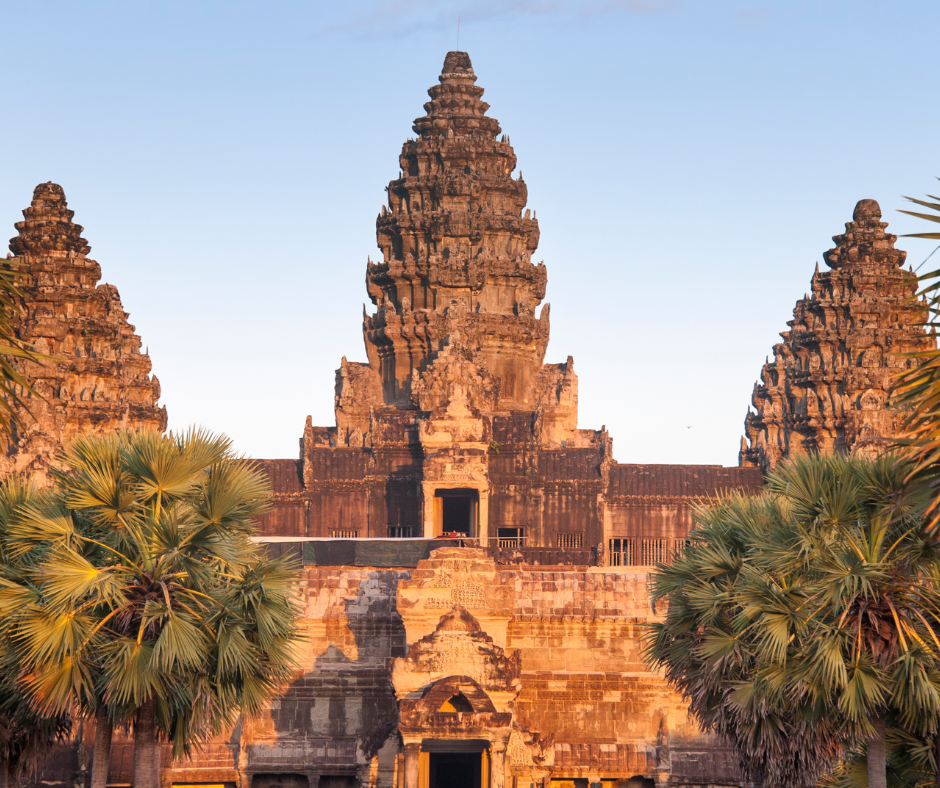
Last Updated April 15, 2026 – Discover the captivating allure of Cambodia, where ancient temples stand in stark contrast to bustling markets and vibrant city life. From the awe-inspiring Angkor Wat to the picturesque landscapes of Kampot and the pristine beaches of Sihanoukville, Cambodia offers a blend of history, culture, and natural beauty like no other. Immerse yourself in the rich tapestry of Khmer traditions, sample exotic flavors at local eateries, and explore hidden gems off the beaten path. Whether you seek adventure, relaxation, or cultural immersion, Cambodia promises an unforgettable journey that will leave you spellbound.
Key Takeaways
- Angkor Wat shows the height of Khmer art, design, and religious history.
- Bayon, Ta Prohm, and Banteay Srei each offer a very different temple experience.
- Early morning visits help travelers enjoy calmer views and better photo chances.
- Flexible pass options make it easier to plan a short stop or a longer temple trip.
- Cambodia’s food, dance, and local life add depth beyond the temple visit.
Overview of Angkor Wat
Historical Significance
 Angkor Wat, built in the 12th century by King Suryavarman II, symbolizes the peak of the Khmer Empire’s architectural and artistic achievements. It served as a Hindu temple dedicated to Lord Vishnu before transforming into a Buddhist site.
The temple complex reflects the cosmology of Hinduism and Buddhism, with intricate carvings depicting mythological stories and religious beliefs. These carvings provide valuable insights into the cultural and spiritual practices of the ancient Khmer civilization.
Architectural Marvels
Angkor Wat’s design showcases the Khmer architects’ exceptional skills, featuring a central tower surrounded by four smaller towers representing Mount Meru, the center of the universe in Hindu mythology. The temple’s symmetrical layout and precise alignment with celestial bodies highlight the advanced astronomical knowledge of its builders.
The intricate bas-reliefs on the walls depict various scenes from Hindu epics like the Ramayana and Mahabharata, showcasing the Khmer Empire’s rich cultural heritage and artistic sophistication. Visitors marvel at the grandeur of Angkor Wat’s architecture, standing as a testament to the empire’s power and influence.
Early Morning Visit
 Exploring Angkor Wat during sunrise offers a magical experience as the first light illuminates the temple’s silhouette against the dark sky, creating a breathtaking sight. Tourists can witness the changing colors of the sky reflecting on the temple’s ancient stones, evoking a sense of tranquility and awe.
The early morning visit allows visitors to avoid crowds and capture stunning photographs in the soft morning light, enhancing their overall Angkor Wat experience. It provides a serene atmosphere for contemplation and appreciation of this magnificent architectural wonder.
Key Temples in Angkor Region
Angkor Thom Highlights
The Bayon temple stands out with its enigmatic smiling faces, a unique feature of Khmer architecture. Visitors marvel at the 216 serene faces carved on its 54 towers.
The South Gate of Angkor Thom boasts imposing stone faces on each side, representing gods and demons engaged in a mythical tug-of-war.
The Terrace of Elephants served as a royal viewing platform for public ceremonies, adorned with elephant carvings and intricate bas-reliefs depicting battles and processions.
Ta Prohm Features
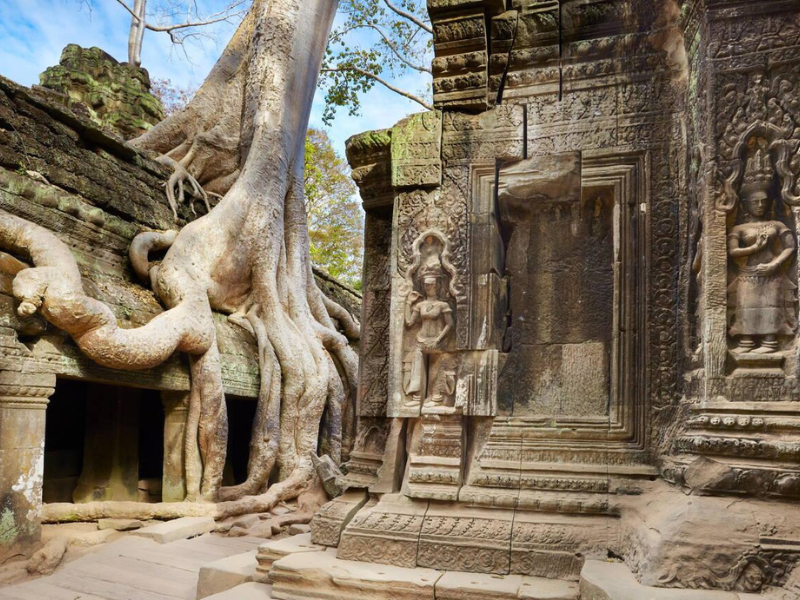 Known for its iconic tree roots, Ta Prohm’s ancient stones are intertwined with the massive roots of silk-cotton trees, creating a mesmerizing sight.
The temple’s layout showcases a harmonious blend of nature and architecture, with towering trees growing amidst the crumbling ruins.
Ongoing restoration efforts at Ta Prohm aim to preserve its delicate balance between man-made structures and natural elements.
Banteay Srei Artistry
Banteay Srei’s allure lies in its intricate carvings, showcasing exceptional craftsmanship on red pink sandstone.
The temple’s small size belies its significance, as it is dedicated to the Hindu god Shiva and stands out for its elaborate decorations.
Crafted from pink sandstone, Banteay Srei’s intricate carvings depict Hindu myths and offer insight into the region’s cultural heritage.
| Category | Details |
| Angkor Wat | Built in the 12th century, originally a Hindu temple, later a Buddhist site, reflecting Khmer artistry. |
| Key Temples | Angkor Wat, Bayon (smiling faces), Ta Prohm (tree-root ruins), Banteay Srei (pink sandstone carvings). |
| Travel Passes | 1-day ($37), 3-day ($62), or 7-day ($72) passes for access to Angkor Archaeological Park. |
| Transportation Options | Tuk-tuks (convenient) or bicycles (eco-friendly). |
| Cultural Experiences | Traditional Khmer dishes (fish amok, Lok Lak), Apsara dance performances, and market visits. |
| Best Time to Visit | Early mornings for serene sunrises and fewer crowds. |
| Suggested Itineraries | 1 day: Angkor Wat (sunrise), Bayon, Ta Prohm. 3 days: Add Banteay Srei, Preah Khan. 7 days: Include Koh Ker, Preah Vihear. |
| Local Insights | Interact with locals, try Khmer cuisine, and learn about daily life through community tours. |
Practical Travel Information
Accessing the Temples
To access the temples in Cambodia, visitors can purchase a one-day pass for $37, a three-day pass for $62, or a seven-day pass for $72. The passes allow entry to all temples within the Angkor Archaeological Park.
Exploring the temples is best done by hiring a tuk-tuk or a bicycle. Tuk-tuks offer convenience and comfort, while bicycles provide a more adventurous and eco-friendly option.
Suggested Itineraries

For a one-day visit, start at sunrise in Angkor Wat, then head to Bayon Temple and Ta Prohm. A three-day itinerary could include Banteay Srei, Preah Khan, and Beng Mealea. For a week-long stay, explore further temples like Koh Ker and Preah Vihear.
Creating a flexible itinerary allows visitors to experience the grandeur of Angkor Wat at different times of the day. Early mornings provide stunning sunrise views, while afternoons are ideal for exploring less crowded temples.
Local Culture Insights
Immersing in local culture involves trying traditional Khmer dishes like fish amok and Lok Lak. Visitors can also witness Apsara dance performances showcasing Cambodia’s rich cultural heritage.
Engaging with locals through markets and community tours offers a glimpse into daily life. Interacting with Cambodians provides valuable insights into their traditions and way of life.
Final Thoughts
You’ve now journeyed through the majestic world of Angkor Wat and its surrounding temples, gaining insights into their historical significance and architectural marvels. As you plan your visit to Cambodia, remember to immerse yourself fully in the rich tapestry of culture and spirituality that these ancient sites offer.
Exploring Angkor is not just about ticking off landmarks; it’s about connecting with a profound legacy that transcends time. So, as you traverse the temple complexes and witness the intricate carvings and grandeur of these structures, let the stories of the past speak to you and leave an indelible mark on your soul. Embrace the mystery, feel the whispers of history in the stones, and create memories that will last a lifetime. Now, go forth and embark on your own Angkorian adventure!
References
- The Editors of Encyclopaedia Britannica. (2026, March 26). Angkor Wat. Encyclopaedia Britannica. https://www.britannica.com/topic/Angkor-Wat
- Rod-ari, M. (n.d.). The Bayon: A temple with many faces. Smarthistory. https://smarthistory.org/bayon-temple-angkor-thom/
- APSARA National Authority. (2021, August 12). Ta Prohm. https://apsaraauthority.gov.kh/2021/08/12/ta-prohm/
- APSARA National Authority. (2021, August 4). Banteay Srei. https://apsaraauthority.gov.kh/2021/08/04/banteay-srei/
- Angkor Enterprise. (n.d.). Available tickets. https://www.angkorenterprise.gov.kh/en/available-tickets